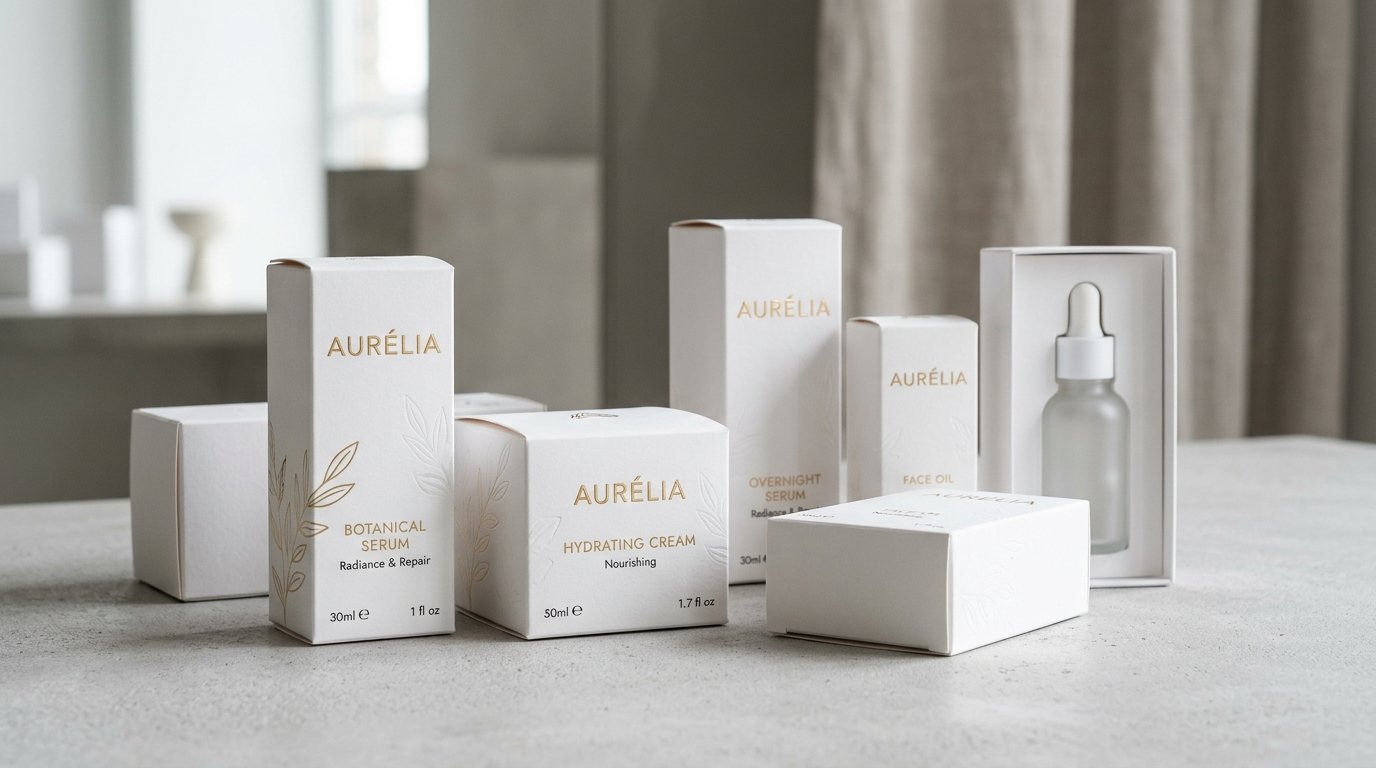
White label packaging refers to generic, unbranded packaging that can be purchased and used as-is, or with minimal branding applied (such as a printed label or sticker).
The term comes from the blank white label traditionally applied to products before a retailer adds their own branding.
White label vs custom packaging:
| | White Label | Custom Packaging |
|---|---|---|
| Design | Generic/stock | Fully custom |
| Branding | Label/sticker | Printed directly |
| MOQ | Often 1 unit | 50–500+ |
| Cost (unit) | Lower | Higher |
| Brand impact | Low | High |
| Lead time | Same day | 1–4 weeks |
When white label packaging makes sense:
- You're just starting out and testing your product
- Your product changes frequently
- Budget is very tight
- You need stock immediately
- Looks generic and professional-looking labels can only partially compensate
- Competitors can use identical packaging
- Misses the brand-building opportunity that custom packaging provides
- Labels can peel, look stuck-on, and reduce perceived product quality
Limitations of white label:
The upgrade path:
Many businesses start with white label + printed labels, then upgrade to fully custom printed packaging once they've validated their product and sales volume. The brand uplift from moving to custom printing is almost always worth it.